Everyone who has worked on a film knows this moment: the cameras stop rolling, the hard drives are full, and the crew is tired but happy. There’s a real sense of accomplishment—along with a quiet uncertainty. What comes next?
At Color Planet Studios, we hear that question often. This is the point where your video stops being a collection of clips and begins to become a real film. Here’s a simple, step-by-step look at what happens next.
What is film post-production?
Post-production begins once filming is complete. It’s where raw footage is shaped into a polished final product through several stages that work together to bring the film to life.
A typical post-production process includes:
- Video editing
- Color grading
- Sound mixing and editing
- Visual effects
- Motion graphics
- Title design and graphics
- Final delivery and mastering
Each stage serves a purpose. When they’re handled with care, they come together to create a film that feels cohesive, polished, and professional.
1. Editing
This is where your story takes shape. The editor picks the takes, sets the rhythm and decides what stays and what goes. Good editing is invisible. You just feel the scene working. Sometimes the best cut is the one that removes your shot, and a good editor will tell you that honestly.
2. Color Grading
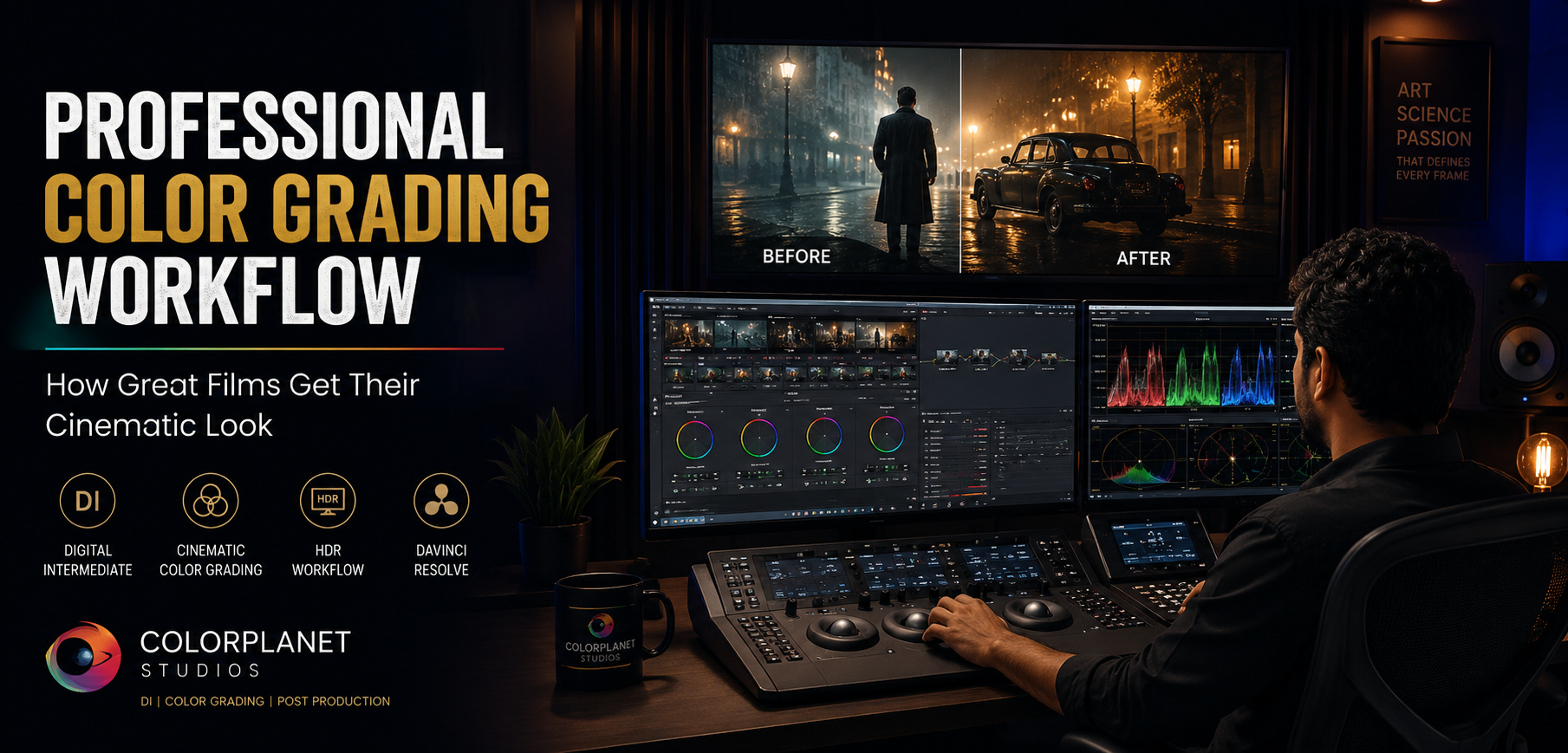
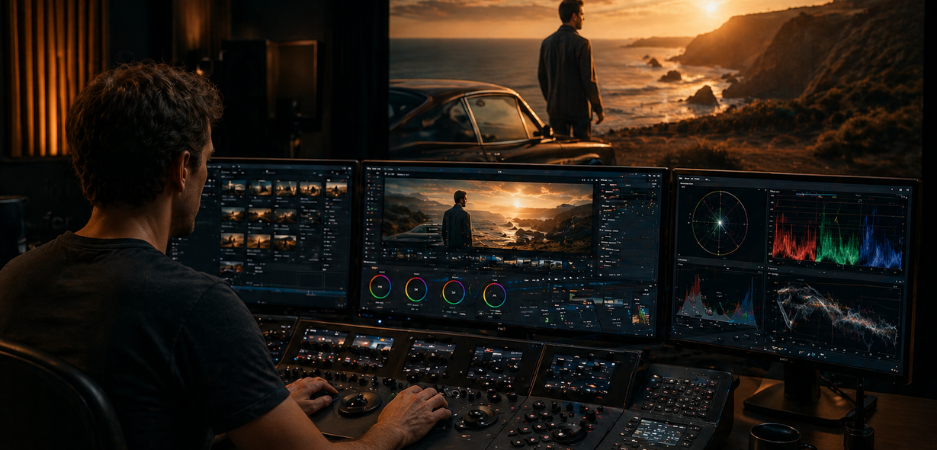
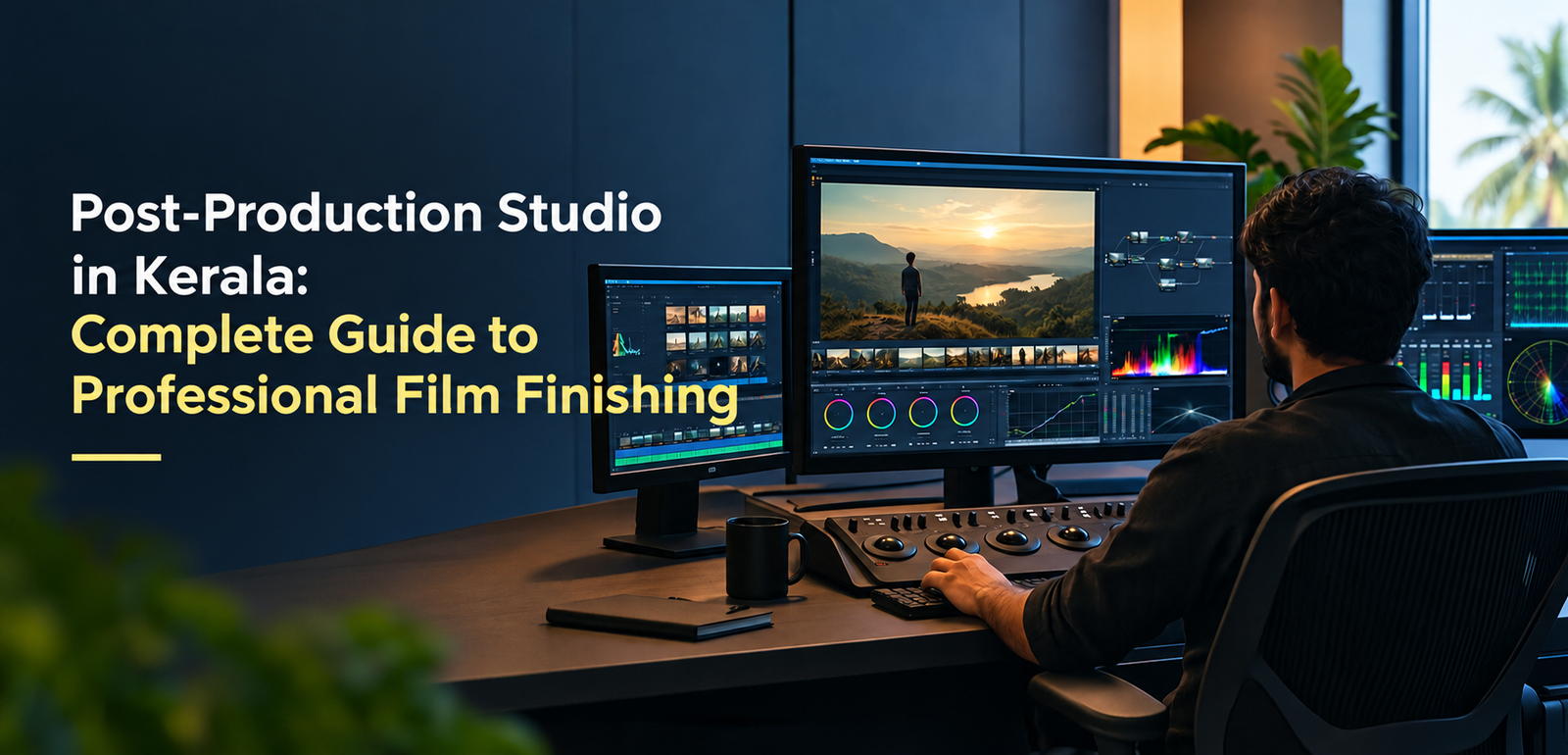
Color has a powerful influence on how a film feels. Cool tones can make a scene feel tense or distant, while warm tones can make it feel intimate or relaxed. Color grading isn’t just about making a film look beautiful—it’s about shaping the mood and matching the story’s tone.
At Color Planet Studios, we refine exposure, balance colors, and create a look that supports the film’s vision. Not every project needs the same treatment: a documentary may call for a natural look, while a sci-fi film may need bold contrast. The color should support the story, never distract from it.
3. Sound
Even the best visuals can lose their power when sound is not done right.
Dialogue, background sound, music, ambience and effects all shape the feel of a scene. Sometimes the tiniest sound can make a moment feel more real.
Professional sound. Mixing makes dialogue clear, balances all sound parts and gives the audience a deeper feel.
For us, sound is not a final touch. Sound is a part of telling the story.
4. Visual Effects and Motion Graphics
Not everything can be caught on film. This is where visual effects step in.
From wiping out bits to building new worlds, visual effects help filmmakers do things that might not work on set.
Motion graphics are handy for titles, opening sequences, information screens, promo videos and other creative parts.
The best visual effects are the ones that feel natural and slide in smoothly.
5. Final. Delivery
When editing and color correction, as well as the addition of sound and effects, have been carried out, the project should be ready for its target platform.
A film intended for showing in a theatre might require a different technical approach from that used for TV, streaming or on social media.
Before delivery, all the final quality checks, technical specifications, audio formats, resolutions and export settings must be carefully attended to.
Although this last stage may appear to be minor, it is important since it ensures that the final project is ready for the audience.
Why Choose a Professional Post-Production Studio?
Post-production work is more than just using software and a computer. It requires experience, technical skills, creativity, and attention to detail.
A professional studio brings professionals together in one workflow. This considerably improves communication and ensures consistency in work from editing until the end.
Above all, professional post-production allows filmmakers to polish their products after the shoot.
Our Methodology at Color Planet Studios
At Color Planet Studios, our collaborative ethos informs all of our projects.
Before starting the finishing process, we make sure that we know what the filmmaker or production team envisions. This way, from the start of the editing process until the finish, we ensure that we prioritise the creative vision.
Having worked in many types of productions, we understand that every endeavour requires different specifications and has a different timeframe.
Post-production, in our view, is not a process of making films look and sound good for no reason, but rather it is about making the right decisions with regard to the narrative.
Completing the Final Frame
A film is brought to life in post-production. From editing and coloring to sound and finishing touches, every component comes together to create the final product. At Color Planet Studios, we assist filmmakers in turning their raw footage into final films made in accordance with their vision.