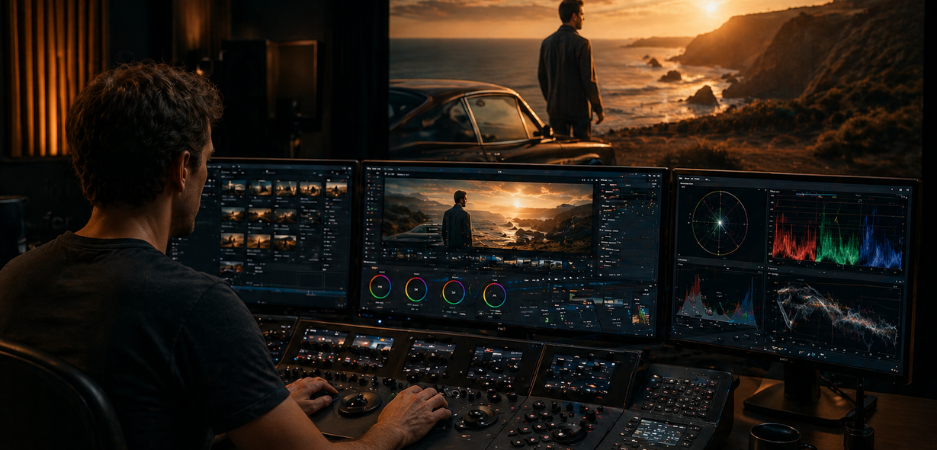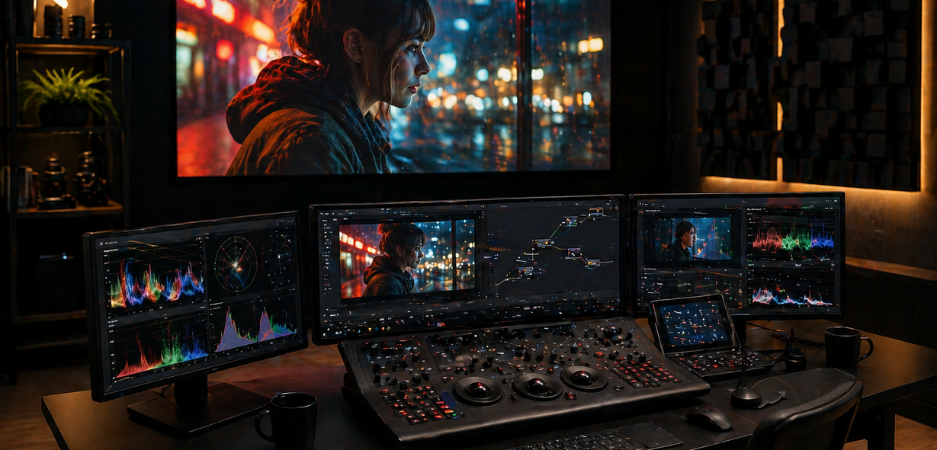

Malayalam cinema continues to evolve with ambitious storytelling, expanding genres, and technically advanced filmmaking approaches. Among the recent projects contributing to this transformation, Lokah Chapter 1: Chandra stands out for introducing a stylized cinematic universe supported by strong visual identity and color-driven storytelling. A major factor behind this achievement was the Digital Intermediate (DI) process, which helped shape the film’s tone, atmosphere, and visual continuity from start to finish.
Through careful grading decisions and cinematic finishing strategies, the Lokha DI workflow played an important role in establishing a new visual direction for large-scale Malayalam productions.
Building a Distinct Visual Language for a Cinematic Universe
Creating a cinematic universe requires more than strong scripts and performances. It demands a carefully designed visual grammar that audiences can instantly recognize and connect with across scenes and characters.
The DI stage allowed filmmakers to craft:
- Controlled contrast levels for dramatic depth
- Balanced color palettes across multiple locations
- Enhanced texture details in costumes and environments
- Stylized tonal separation between narrative phases
These visual decisions helped ensure that the film’s world felt immersive, consistent, and visually memorable. In projects like Lokah Chapter 1: Chandra, DI becomes more than technical correction—it becomes a storytelling tool.
Supporting Genre Expansion in Malayalam Cinema
Superhero-inspired storytelling introduces new visual expectations compared to traditional drama-based filmmaking. Lighting conditions, production design elements, and action sequences require stronger tonal consistency and cinematic polish.
The DI process helped unify:
- Night-action sequences
- Atmospheric environment lighting
- Stylized character introductions
- Dramatic transitions between narrative spaces
By enhancing these visual layers, the Lokha DI process supported the film’s ambition to stand alongside larger cinematic universes emerging across Indian cinema.
This marks an important step forward in how regional industries approach visual world-building.
Enhancing Character Identity Through Color Design
Color grading plays a subtle yet powerful role in defining characters and emotional transitions. Instead of relying only on dialogue or performance cues, visual tone can guide audience perception throughout the story.
During the DI workflow, color strategies helped:
- Highlight emotional shifts across scenes
- Create contrast between character arcs
- Support mood transitions in action-driven moments
- Reinforce narrative pacing visually
Such refinements strengthen storytelling clarity while maintaining cinematic engagement across the film’s runtime.
Achieving Consistency Across Complex Shooting Conditions
Films that involve multiple shooting environments often face challenges maintaining visual continuity. Differences in lighting setups, camera configurations, and production schedules can affect how scenes appear when assembled together.
Digital Intermediate workflows resolve these inconsistencies by:
- Matching exposure across shots
- Balancing skin tone accuracy
- Stabilizing highlight and shadow details
- Ensuring smooth scene-to-scene transitions
The Lokha DI process ensured that the film retained a cohesive cinematic identity despite technical variations during production.
Preparing the Film for Modern Viewing Platforms
Today’s films must perform well not only in theatres but also across digital streaming platforms. This requires color grading pipelines that support multiple delivery standards without compromising artistic intent.
The DI stage helped prepare Lokah Chapter 1: Chandra for:
- Theatrical projection formats
- High-resolution mastering
- OTT-ready delivery workflows
- Consistent display performance across screens
As Malayalam cinema continues expanding its reach globally, such finishing precision plays an increasingly important role in audience experience.
Strengthening the Future of Visual World-Building in Regional Cinema
The success of visually ambitious films like Lokah Chapter 1: Chandra demonstrates how modern DI workflows contribute directly to storytelling depth and cinematic scale. By shaping tone, enhancing realism, and supporting genre transitions, DI helps filmmakers push creative boundaries with confidence.
More importantly, projects of this scale show how thoughtful color finishing can support the creation of long-form cinematic universes within regional industries. As filmmakers continue exploring larger narratives and stylized storytelling approaches, DI workflows will remain central to defining the next generation of Malayalam cinema’s visual identity.